Emergency AC Service in Fort Myers & Southwest Florida: What to Do When Your AC Dies
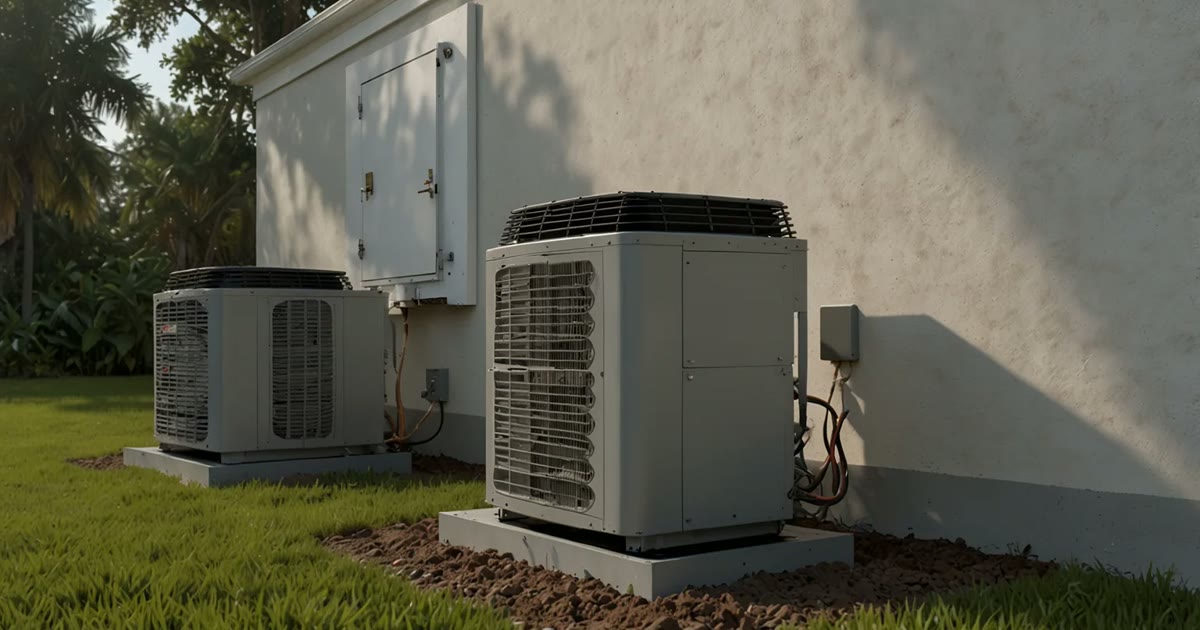
When your air conditioner quits in the middle of a Florida summer, you need a licensed technician out fast, not a sales pitch. Emergency AC service means a same-day or after-hours repair visit to restore cooling when a system has failed outright: no cold air, a frozen coil, a tripped breaker that keeps tripping, or a unit making noises it never made before. City to City HVAC (FL License #CAC1824318) answers emergency calls across Lee and Collier Counties. If your system is down right now, call (239) 810-9080 and tell us what the unit is doing. We'll talk you through what's safe to check yourself and get a technician on the way if you need one.
Emergency AC service is a priority repair visit for an air conditioning system that has stopped cooling or become unsafe to run, as opposed to routine maintenance or a scheduled replacement.
Key Takeaways
- In Southwest Florida, a dead AC is a health issue, not just a comfort issue. Indoor temperatures can hit dangerous levels within hours in summer.
- Check the thermostat, breaker, and filter before calling. Those three items cause a large share of no-cool calls, and you can rule them out in five minutes.
- Emergency service means same-day response for a total failure. Slow cooling or a weak airflow can usually wait for a scheduled appointment.
- Most emergency calls in our fleet data spike between June and September, when systems run near-continuously.
- Know your system's age and model before you call. It speeds up the diagnosis and the parts conversation.
Florida is not a place where you can ride out a broken air conditioner. According to the U.S. Energy Information Administration's 2020 Residential Energy Consumption Survey, 88% of U.S. households use air conditioning, and in the South that figure rises to 93% (EIA). Here in Lee and Collier Counties, it's effectively everyone. When that system stops, the question isn't whether to call. It's how fast, and what to do while you wait.
What counts as an AC emergency, and what can wait until morning?
A true emergency is a system that has stopped cooling entirely during extreme heat, or a situation with any safety risk: burning smells, water pouring from an attic air handler, or a breaker that trips again the moment you reset it. Those need a same-day response. A house that's cooling but struggling, or a room that's warmer than the rest, can usually wait for a scheduled visit without putting anyone at risk.
Use the two-hour test. If the indoor temperature is climbing fast and will pass 85°F before morning, treat it as an emergency. That matters most in households with infants, elderly family members, or anyone with a heart or respiratory condition. Heat stress builds faster than most people expect, especially in homes with attic ductwork leaking heat into the living space all day.
Between those extremes sits everything else. Short cycling, a rattling outdoor fan, a thermostat reading a few degrees off. Annoying, worth fixing, rarely worth an after-hours call. Scheduling those during normal hours is easier on everyone, including your patience.
What should I check before calling for emergency AC service?
Three things, in this order. First, the thermostat: confirm it's set to cool, the temperature setting is below the current room temperature, and the batteries aren't dead. It sounds obvious. On a busy summer day we still get calls that end at the thermostat.
Second, the breaker. Find your electrical panel and look for the HVAC breaker. If it's tripped, reset it once. If it trips again, stop there. A breaker that won't hold is telling you something in the system is drawing too much current, and repeated resets can turn a repairable problem into a burned-out compressor.
Third, the filter. A filter clogged with a summer's worth of dust and pet hair chokes airflow, which can freeze the evaporator coil. If you see ice on the refrigerant line or the indoor coil, shut the system off at the thermostat and let it thaw. Running a frozen coil hard is one of the fastest routes to compressor damage.
If all three check out and the system still isn't cooling, that's when the call is worth making. Note what the unit is doing: is the outdoor fan spinning, is the indoor blower running, is there warm air at the vents? Two sentences of description can save the technician a diagnostic step.
How fast can a technician get here in Lee and Collier Counties?
Response time depends on two things: where you are and what the day looks like. Our service area covers Fort Myers, Cape Coral, Naples, Bonita Springs, Estero, and Lehigh Acres. A call from central Fort Myers on a normal weekday is a different animal than a call from Cape Coral on the first 95-degree day of June, when every contractor in the county is running behind.
That seasonal pattern shows up clearly in our own service records. Emergency repair calls make up a much larger share of our daily fleet work in summer than in winter, peaking between June and September when systems run nearly nonstop.
What that means for you: if your system fails in July, expect the whole market to be busy, and call early in the day if you can. If it fails in November, you'll likely have your pick of appointment times. Planning around that reality beats being surprised by it.
Repair or replace: how do you decide when a system dies?
When a compressor or a blower motor fails on a ten-year-old system, you're facing a real decision, and it helps to lay the options side by side before you commit to anything.
| Option | Best when | Typical timeline | Main trade-off |
|---|---|---|---|
| Emergency repair | The system is under 10 years old and the failed part is a common component (capacitor, contactor, fan motor) | Same day to next day | Fixes the symptom; an aging system may develop other issues |
| Scheduled repair | The problem is minor and the house is staying cool enough | A few days out | Slower, but you keep full use of normal business hours |
| System replacement | The system is 12+ years old, refrigerant is obsolete, or repair estimates approach half the cost of replacement | Days to a couple of weeks, depending on equipment availability | Bigger upfront project, but resets the clock on efficiency and reliability |
Takeaway: repair makes sense for younger systems with isolated failures; replacement earns its cost when the system is old, inefficient, or failing repeatedly.
There's no universal cutoff age, but a system past its second decade that needs a major component is usually better replaced than patched. If you're weighing that call, our guide to AC replacement in Southwest Florida walks through the factors in more detail.
Why do so many AC systems fail in the middle of summer?
Because summer is exactly when they work hardest. An AC in Fort Myers runs 10 or more hours a day for months at a stretch, and the components that fail under that load, capacitors and contactors especially, tend to give out during the longest, hottest runs. A capacitor that limped through May will often die on the first week of full-time June operation.
There's also a sizing mismatch baked into many Florida homes. Single-family homes make up 90% of the households in the EIA's national survey data (EIA), and many of those homes here were built with systems sized for a different era of insulation and window standards. An undersized or oversized system cycles harder and wears faster, and the failure tends to surface at peak load, which is to say, at the worst possible moment.
Dirty condenser coils are the other big summer killer. An outdoor unit sitting in a screened enclosure, collecting grass clippings and oak pollen, sheds heat less efficiently every month it goes uncleaned. Higher head pressure means hotter-running components and shorter component life. It's the most preventable failure we see, which is why we keep coming back to maintenance in almost every conversation. Our AC maintenance service covers coil cleaning and the electrical checks that catch weak capacitors before they fail.
How does proper sizing prevent emergency calls?
A lot of emergency service traces back to equipment that was never right for the house to begin with. Sizing isn't guesswork. ENERGY STAR's guidance for room air conditioners notes that you should add about 600 BTU for each additional person regularly in the space, and reduce capacity by roughly 10% for heavy shade (ENERGY STAR). Whole-home systems follow the same logic at a larger scale, factoring in insulation, window orientation, and Florida's cooling-dominant climate.
An oversized system is the sneaky problem. It cools the air fast, shuts off before it has dehumidified the house, and leaves you clammy at 74 degrees. Then it short cycles, which wears out starters and contactors. Homeowners chase the symptom for years, replacing parts, when the root issue is a unit that was too big from day one. If your system has always short cycled, mention it. It changes the replacement conversation entirely.
What should you do while waiting for the technician?
A few practical moves. Close blinds and curtains on the sun-facing side of the house. Run ceiling fans; moving air makes a warm room feel several degrees cooler even though the thermostat hasn't moved. Skip the oven and the dryer. If you have a window unit or a portable AC in a closet, now is the time to set it up in the room where people will actually be sleeping.
Keep pets in mind too. Dogs and cats handle heat worse than people assume, and a closed house at 88°F indoors is genuinely dangerous for them. If the wait is going to be long, arrange for them to spend the afternoon somewhere cooler.
And gather the basics the technician will want: the system's brand and model number (on the outdoor unit's data plate), roughly how old it is, and whether anyone has serviced it in the last couple of years. If you're a repeat customer, we'll have most of that on file already.
Whether you're in Fort Myers, Cape Coral, Naples, Bonita Springs, Estero, or Lehigh Acres, we cover the whole two-county area from our Fort Myers base, and a single call gets you the same licensed, insured crew regardless of which side of the Caloosahatchee you're on.
How do you avoid the next emergency call?
Most of the emergency calls we run never had to happen. A twice-yearly maintenance visit catches the dying capacitor, the low refrigerant charge, and the fouled coil before they take the system down on a Saturday afternoon. Between visits, change the filter every one to three months, keep the outdoor unit clear of vegetation, and pay attention to new sounds or weaker airflow. Small changes in how a system runs are usually early warnings, not quirks.
If your system has needed more than one repair in the past two years, that pattern itself is information. Talk it through with your technician honestly. Sometimes the right answer is one more repair to get through the season and a planned replacement on your schedule, in the winter, when you can take your time instead of making a decision in a hot living room.
Frequently Asked Questions
How quickly can you respond to an emergency AC call?
Same-day response is our goal for true emergencies across Fort Myers, Cape Coral, Naples, Bonita Springs, Estero, and Lehigh Acres. During peak summer, when demand is highest, calls that come in early in the day are typically seen sooner. Call (239) 810-9080 and we'll give you a realistic window for your address before we commit to anything.
Is a broken AC dangerous for my health?
It can be, especially in Florida summer. Indoor temperatures in a sealed house can climb into the high 80s within hours, which puts infants, seniors, and people with heart or respiratory conditions at real risk of heat stress. Treat a total cooling failure during extreme heat as urgent, and use fans, shade, and a cooler room to bridge the gap until help arrives.
Should I turn my AC off if it's not cooling?
If you see ice on the refrigerant line or the indoor coil, yes, shut it off at the thermostat and let it thaw. If the system is running but blowing warm air with no ice, it's usually fine to leave it on while you wait, though it won't be doing much. Never keep resetting a tripped breaker; one reset is enough to know something's wrong.
What are the most common emergency AC repairs?
Failed capacitors and contactors top the list, followed by frozen evaporator coils from airflow problems, failed blower motors, and refrigerant leaks. Most of these are straightforward repairs on a healthy system. The pattern matters more than any single failure: repeated component failures on an older system usually point toward replacement rather than another repair.
Do you service both Lee and Collier Counties?
Yes. City to City HVAC is licensed in Florida (#CAC1824318) and serves all of Lee and Collier Counties, including Fort Myers, Cape Coral, Naples, Bonita Springs, Estero, and Lehigh Acres. For scheduled work like maintenance or replacement estimates, you can also reach us through our online contact page.
When your system is down and the house is heating up, call (239) 810-9080. City to City HVAC, FL License #CAC1824318, serving Lee and Collier Counties. We'll get a licensed technician headed your way and keep you informed the whole time.