Indoor Air Quality Solutions for Southwest Florida Homes
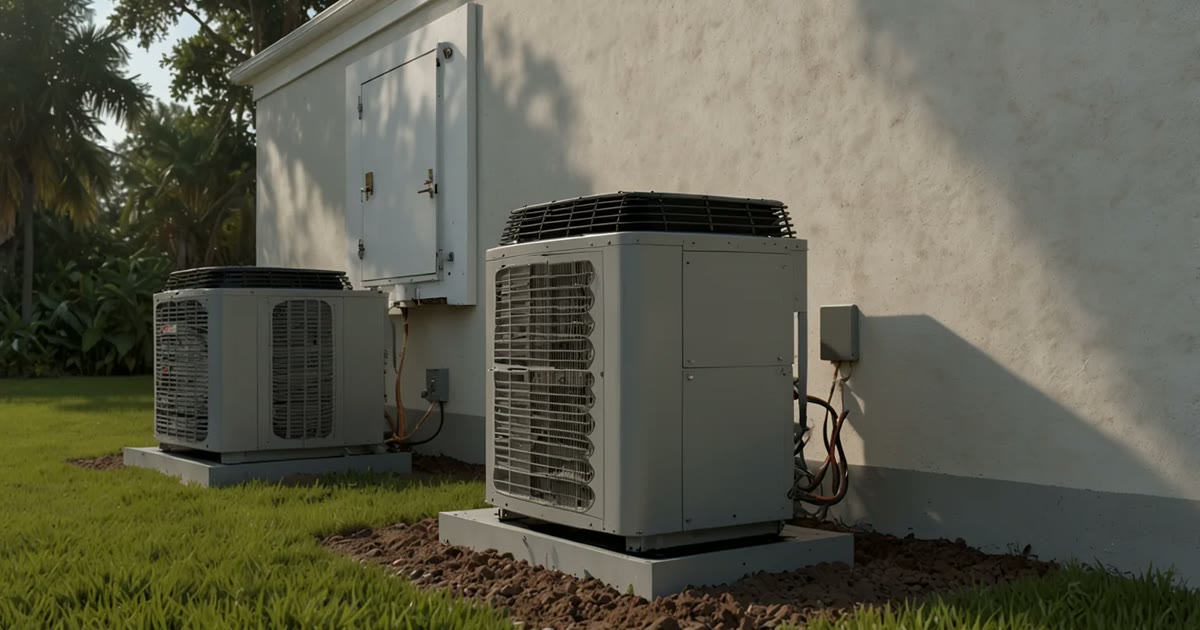
Indoor air quality solutions are the equipment and habits that remove humidity, particles, and contaminants from the air inside your home: high-MERV filtration, UV lights, dehumidification, duct sealing, and proper ventilation. In Southwest Florida, where air conditioners run most of the year and humidity stays high, the fastest wins are usually a correctly sized filter, a dehumidifier matched to your system, and ductwork that doesn't pull attic air into your living space. If you're dealing with musty smells, dust that keeps coming back, or rooms that never feel dry, City to City HVAC can walk your system and tell you what's actually causing it. Call (239) 810-9080 and we'll help you figure out the next step, whether that's a repair, an upgrade, or just a different filter.
Indoor air quality (IAQ) is simply how clean and healthy the air inside your home is — measured by things like humidity, dust, pollen, mold spores, and chemical vapors.
Key Takeaways
- In Florida, humidity control is air quality control. A system that cools but leaves the house at 60% relative humidity will still feel clammy and grow mold.
- 88% of US households use air conditioning, and 93% of households in the South do — so your AC is your de facto ventilation system, and its filter matters more here than almost anywhere else (EIA 2020 RECS).
- Filter upgrades are cheap; duct leaks are the hidden problem. Sealing leaky ducts in a hot attic often does more for air quality than any add-on device.
- Sizing matters. An oversized AC short-cycles and never dehumidifies properly. Adding occupants? ENERGY STAR's sizing guidance adds about 600 BTU per extra person, and heavy shade reduces needed capacity by about 10%.
- UV lights and whole-home dehumidifiers help specific problems — but only after filtration and duct sealing are handled.
Why does indoor air quality matter more in Florida than up north?
Because your house is sealed tight and your AC runs nearly year-round. Up north, people open windows for a few months a year and flush the house with fresh air. In Fort Myers, Cape Coral, and Naples, windows stay closed from March through November because it's too hot and humid outside. Your air handler becomes the only thing moving air through your home.
The numbers back this up. According to the US Energy Information Administration's 2020 Residential Energy Consumption Survey, 88% of US households use air conditioning — but in the South, it's 93%, and 90% of single-family homes nationwide have it. When nearly every home runs AC most of the year, the ductwork, filter, and coil become the lungs of the house.
Then there's moisture. Florida's dew point stays high for eight-plus months a year. Every time a door opens, humid air rushes in. Every minute your AC runs, it's pulling water out of that air. If the system short-cycles — runs for five minutes, shuts off, repeats — it cools the air but doesn't run long enough to wring out the moisture. That's why an oversized system often means a cold-but-clammy house, and a clammy house grows mold on closet walls, behind furniture, and inside your ductwork.
What are the main indoor air quality solutions for a Florida home?
There are five that matter, in rough order of return on your money:
1. Filtration. The filter is the first line of defense. Most Florida homes use 1-inch filters rated MERV 8 or lower because a thick filter restricts airflow in older systems. The right move depends on your air handler: some can take a 4-inch media cabinet with a MERV 11 filter, which catches far more fine particles without choking airflow. We check static pressure before recommending an upgrade, because a filter your system can't breathe through causes its own problems.
2. Duct sealing. In Lee and Collier Counties, most ductwork runs through a hot, humid attic. If that ductwork leaks — and most of it does — the system pulls attic air, insulation fibers, and everything in the attic into your supply stream. A duct leakage test tells you exactly how bad it is. Sealing with mastic or aeroseal-style treatment often fixes dust problems that filters never could.
3. Dehumidification. A whole-home dehumidifier ties into the return duct and holds your indoor humidity in the 45–55% range even when the AC isn't running much — shoulder season, rainy afternoons, overnight. This is the single biggest comfort upgrade most Florida homeowners have never considered.
4. UV germicidal lights. Mounted at the coil or in the supply plenum, UV light keeps the evaporator coil and drain pan from growing biofilm. A dirty, biological-growth-covered coil both spreads spores and hurts cooling performance. It's a targeted tool, not a whole-house cure.
5. Ventilation control. Bathroom and kitchen exhaust fans that actually vent outside (not into the attic), plus a tight building envelope, keep humid air from getting in. A cheap hygrometer from the hardware store tells you your real indoor humidity — if it reads above 55% most days, you have a moisture problem before you have a particle problem.
How do I know if my home's air quality is actually bad?
Your house tells you. Musty smell when the AC first kicks on usually means biological growth on the coil or in the drain pan. Dust collecting on surfaces within a day or two of cleaning points to return-duct leaks or a filter that's the wrong size or bypassing around its slot. Condensation on windows, warping baseboards, or a clammy feeling at 75 degrees means humidity is winning. Allergy symptoms that ease up when you leave the house point at something inside — often mold spores or dust mites thriving in damp conditions.
A professional indoor air quality assessment starts with measurements, not products: humidity in several rooms, temperature split across the coil, static pressure, duct leakage, and a look at the coil and blower. Anyone who recommends a $1,500 add-on before measuring anything is selling, not diagnosing.
Which air quality upgrade is worth the money?
It depends on what's wrong, but here's how the common options stack up against each other:
| Solution | Best for | Typical install | Maintenance |
|---|---|---|---|
| Media filter upgrade (4-inch MERV 11 cabinet) | Dust, pollen, fine particles; homes with allergy sufferers | Added at the air handler; usually a same-day job | Filter change every 6–12 months |
| Whole-home dehumidifier | Clammy rooms, musty odor, mold prevention during shoulder season | Ties into return ductwork; one-day install | Filter cleaning and annual checkup |
| UV germicidal light | Recurring coil mold, drain-pan slime, musty smell at startup | Mounted at coil or plenum; quick install | Bulb replacement yearly |
| Duct sealing | Dust, humidity infiltration, uneven rooms, wasted cooling | Tested and sealed with mastic; one to two days | None after sealing |
The takeaway: fix airflow and leaks first — a media filter and sealed ducts solve more complaints in Florida homes than any single gadget, and the dehumidifier earns its spot once the envelope and ducts are tight.
Does my air conditioner size affect air quality?
More than most people realize. An AC removes two things: heat and moisture. It only removes moisture while it's running, and it removes it most effectively during long run cycles. An oversized system cools the room in a few minutes and shuts off before the coil has wrung much water out of the air. The result is the classic Florida complaint: the thermostat says 74, but the house feels damp.
Sizing also shifts with how you live. ENERGY STAR's sizing guidance for room units adds about 600 BTU for each additional occupant, and reduces needed capacity by about 10% for a heavily shaded room. Whole-house load calculations work the same way — occupancy, shade, insulation, and window orientation all move the number. If your household has grown since the system was installed, or you've added shade trees or replaced windows, the original sizing may no longer fit, and the symptom shows up as humidity, not temperature.
When should I call a professional instead of DIY?
Change your own filters, clean your drain line with a wet/dry vac, and run your bath fans. Those are safe DIY wins. Call a licensed contractor when the coil needs cleaning, when rooms won't balance, when humidity stays above 55% with the system running, or when you suspect duct leakage — those require measurements and tools most homeowners don't have. Biological growth inside an air handler is another one: disturbing it without containment spreads spores through the house.
Florida licensing matters here. Working on refrigerant circuits, electrical components, or sealed duct systems without a license is a gamble with your equipment and your warranty. City to City HVAC holds Florida License #CAC1824318, and we serve homeowners across Fort Myers, Cape Coral, Naples, Bonita Springs, Estero, and Lehigh Acres. If you're anywhere in Lee or Collier County and your air just doesn't feel right, that's the moment to get a second set of eyes on it — and if you're comparing contractors, our guide to HVAC maintenance in Southwest Florida covers what a proper tune-up should include.
What does the seasonal pattern look like for air quality problems in SWFL?
Our service records tell a clear story. Emergency repair calls dominate the summer months, when systems run flat-out and marginal components fail — and those breakdowns have air quality consequences, because a system that's off isn't dehumidifying, and a house in a closed-up Florida summer heats and humidifies fast. Spring and fall, when run times drop, are when humidity complaints surface: the AC rarely runs long enough to dry the air, and that's when whole-home dehumidifier calls spike.
What that pattern means for you practically: the best time to address air quality is before the summer rush. A duct sealing job or a dehumidifier install scheduled in the spring gets done on your timeline, not the emergency queue's.
And if your system is aging and the air quality issues keep coming back, it may be worth weighing repair against replacement — our breakdown of when AC replacement makes sense in Florida walks through that decision honestly. For smaller systems or add-on spaces, ductless mini-split options give you zone control that can independently manage humidity in problem rooms.
Whether you're in a 1960s Cape Coral block home with original ductwork or a newer Estero build with a tight envelope, the diagnostic sequence is the same: measure humidity, check the filter and coil, test the ducts, then spend money where the measurements point. If you'd rather have a tech do that walkthrough, one visit covers it.
Frequently Asked Questions
How often should I change my AC filter in Florida?
Every 30 to 90 days for standard 1-inch filters, depending on pets, occupants, and how much the system runs. In Southwest Florida's long cooling season, systems run more hours than the national average, so filters load faster — check monthly during summer. A 4-inch media filter typically goes 6 to 12 months. If the filter looks gray and loaded before the schedule says so, change it early; a clogged filter starves airflow and hurts both cooling and dehumidification.
Will a UV light kill mold in my ductwork?
A UV light keeps biological growth from establishing on the coil and drain pan, where it most often starts, but it doesn't clean existing growth out of ductwork. If ducts are contaminated, they need professional cleaning and the moisture source needs fixing first — otherwise growth returns. UV is best used as prevention after a coil cleaning and duct assessment, paired with humidity control so the conditions that allow mold don't come back.
What humidity level should my house be in Florida?
Aim for 45% to 55% relative humidity. Below 45% is unnecessary and can dry out wood furnishings; above 60% is where mold, dust mites, and that clammy feeling take hold. Buy a $10 hygrometer and check a few rooms. If readings stay above 55% while the AC runs, the system is short-cycling, the ducts are leaking, or the load has changed — all fixable, but all worth diagnosing rather than masking with a portable dehumidifier in one room.
Do I need a whole-home dehumidifier if I have a new AC?
Not always. A correctly sized, modern system in a tight house often holds humidity fine during peak summer, when it runs long cycles. The gap shows up in shoulder season — March, late October, rainy afternoons — when run times drop. If your new system cools well but the house feels damp in those windows, a whole-home dehumidifier is the right fix. If humidity is high year-round, the sizing or ductwork deserves a second look before buying equipment.
Can dirty ducts make my family sick?
Leaky or contaminated ducts can worsen allergy and asthma symptoms by circulating dust, insulation fibers, and mold spores, and attic leakage pulls humid air that encourages dust mites and mold. Whether duct cleaning itself helps depends on the situation: sealing leaks and fixing moisture usually matters more than cleaning, and cleaning makes sense when there's visible growth or heavy debris inside the ducts. Start with a leakage test and an inspection rather than a telemarketing-style cleaning special.
Our Credentials
City to City HVAC is a licensed Florida contractor, License #CAC1824318, serving Lee and Collier Counties including Fort Myers, Cape Coral, Naples, Bonita Springs, Estero, and Lehigh Acres. We've been fixing and improving Southwest Florida home comfort systems for over a decade, and every recommendation starts with measurements, not a parts catalog.
Ready to find out what's actually in your air? Call (239) 810-9080 or fill out the quote form above, and we'll schedule a walkthrough that tells you exactly where your humidity, filtration, and ductwork stand.