AC Replacement in Iona, FL: What Homeowners Need to Know
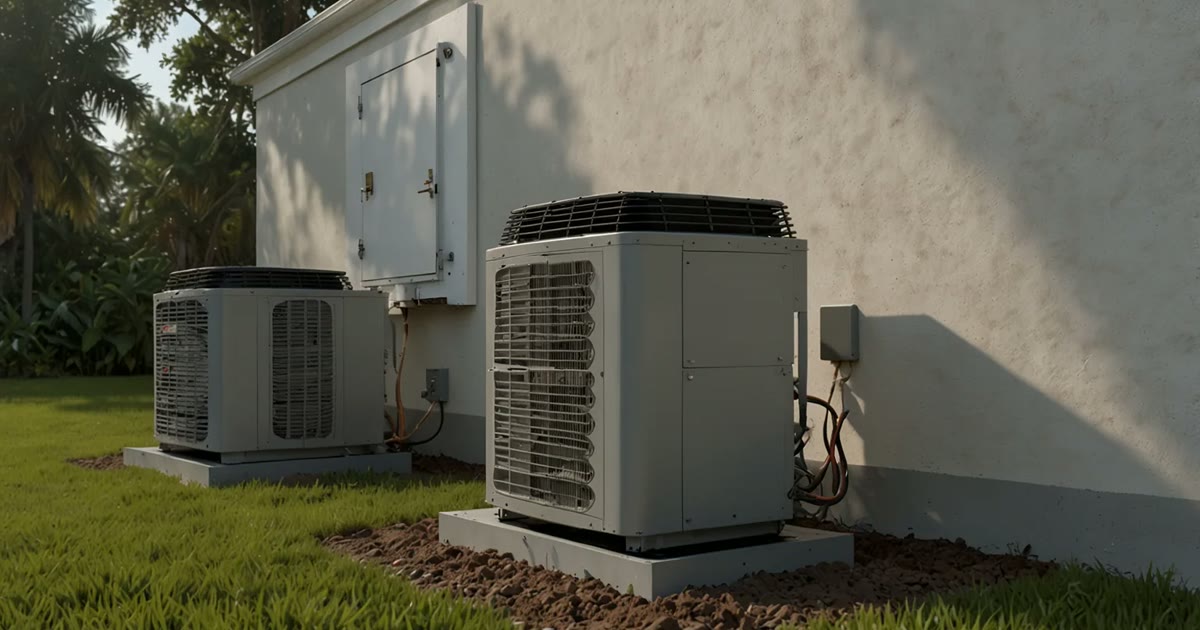
If your AC in Iona is more than 10–12 years old, needs repeated repairs, or struggles to keep up during Southwest Florida's long cooling season, replacement is usually the smarter call than another repair. A properly sized system matched to your home's layout, shade, and occupancy is the foundation of comfort here — and sizing depends on real details like shade coverage and household size, not a one-size-fits-all rule. Most Iona replacements run from permits and old-unit removal through new system startup in a single day.
Questions about whether repair or replacement makes sense for your home? Call City to City HVAC at (239) 810-9080 and talk it through with a licensed Florida contractor — no pressure, just an honest read on your equipment.
AC replacement means removing an existing air conditioning system and installing a new one — indoor unit, outdoor condenser, or both — rather than repairing the old equipment.
Key Takeaways
- Per the U.S. Energy Information Administration, 88% of U.S. households use air conditioning — and 93% in the South, where Iona sits. AC isn't optional here; it's the backbone of the home.
- Age, repair frequency, and rising electric bills are the three clearest signals that replacement beats repair.
- Correct sizing matters: ENERGY STAR guidance adds 600 BTU per extra household occupant and trims 10% off capacity for a heavily shaded home — both common in Iona neighborhoods.
- In our own service records, emergency repair calls spike June through September, which is exactly when a worn system is most likely to fail.
- City to City HVAC is licensed as FL License #CAC1824318 and serves Iona, Fort Myers, Cape Coral, Naples, Bonita Springs, Estero, and Lehigh Acres.
When Does an AC Need Replacing Instead of Repairing?
Most of the time, the answer comes down to three things: age, repair history, and performance.
Age first. Central AC systems in Florida work harder than almost anywhere in the country. The EIA's Residential Energy Consumption Survey found that 93% of households in the South use air conditioning, compared to 88% nationally, and single-family homes hit 90% (EIA). When a system runs most of the year for a decade or more, compressors, capacitors, and coils wear out on a timeline you can roughly predict. Once you're past the 10–12 year mark, every repair is a bet on how much life is left.
Repair history is the second signal. One failed capacitor is a normal mid-life fix. A compressor failure, a cracked evaporator coil, or a refrigerant leak on an old system is different — those repairs can approach a meaningful share of what a new system runs, and you'd still be left with aging equipment. If you've called for service two or three summers in a row, the pattern matters more than any single bill.
Performance rounds it out. Warm spots in back bedrooms, humidity that never quite drops, longer and longer run times — these show up before a full breakdown. In Iona's salt-tinged coastal air, outdoor coils and cabinets also corrode faster than inland, which shortens equipment life compared to the manufacturer's brochure.
How Do You Know What Size AC Your Iona Home Actually Needs?
Sizing is where a lot of replacement jobs go wrong. Bigger is not better.
An oversized system cools the air fast and shuts off before it has pulled enough moisture out. The result is a house that feels clammy even at the set temperature, plus the wear of constant short-cycling. An undersized system runs all afternoon and never catches up in August. Both mistakes cost you.
Proper sizing looks at square footage, ceiling height, insulation, window orientation, and occupancy. ENERGY STAR's guidance for room air conditioners gives a useful sense of the variables: add 600 BTU for each extra person who regularly occupies the space, and reduce capacity by 10% if heavy shade covers it (ENERGY STAR). Whole-home systems work the same way in principle — a shade-drenched lot under mature oaks and a two-story house with afternoon sun exposure in the same neighborhood can need very different equipment.
That's why we do a load calculation on every replacement rather than just matching the old unit's tonnage. The previous installer may have guessed wrong in the first place.
Repair or Replace: Which Makes Sense for Your Situation?
Here's the framework we walk through with Iona homeowners.
If the system is under ten years old and the repair is a single electrical or mechanical part, repair almost always wins. If the system is past twelve years and the repair involves the compressor or coil, replacement usually wins. In between, the deciding factors are how long you plan to stay in the home, how the refrigerant supply situation looks on older R-22 equipment, and whether rising electric bills suggest efficiency losses you'll pay for every month.
| Option | Best for | Typical trade-off |
|---|---|---|
| Targeted repair | Younger system, single failed part, otherwise healthy | Lowest immediate spend, but the clock keeps running on an aging unit |
| Replace outdoor condenser only | Indoor coil and furnace/air handler still sound, matching refrigerant available | Less disruption, though mixing old and new components can limit matched performance |
| Full system replacement | 10+ year-old system, major component failure, chronic comfort complaints | Bigger upfront project, but matched indoor/outdoor equipment sized correctly for the home |
Takeaway: the younger the system and the smaller the failure, the more repair makes sense — and the older the system, the more a full matched replacement earns its keep.
What Happens During an AC Replacement Day?
Homeowners are often surprised at how contained the process is.
We start in the morning with a look at the existing system — refrigerant recovery first, since venting old refrigerant is a violation of federal law and we handle it properly. Then the old equipment comes out: outdoor condenser, indoor coil, and line set as needed. The new pad, condenser, coil, and air handler or furnace go in, the system gets evacuated with a vacuum pump to pull out moisture and air, and then we charge it to the manufacturer's specifications.
The afternoon is testing. Temperatures split across the coil, static pressure, thermostat operation, and a check of the condensate drain — because a drain problem on day one is the most common callback in this business. Before we leave, we walk you through the new thermostat and filter routine. Most single-day jobs wrap before dinner.
Permit and inspection are part of the job in Lee County. We pull the permit, and the county inspector verifies the installation. That paperwork protects you at resale and confirms the work meets code.
Why Do So Many AC Failures Happen in Peak Summer?
Look at our own call log across a year and a pattern jumps out. Replacement and routine installs stay fairly steady, but emergency repair calls climb hard from June through September — the hottest, most punishing stretch of Southwest Florida's cooling season.
It makes sense when you think about it. A system limping along in March gets exposed in August, when it runs fourteen-hour days and every weak component is under maximum load. Condensers clogged with oak pollen and coastal salt crust lose heat-transfer efficiency right when they need it most. The lesson for Iona homeowners: a system showing warning signs in spring rarely makes it quietly through summer. Spring and early summer are also the smoothest times to schedule a planned replacement, because you're choosing the date instead of the heat choosing it for you.
What Should You Ask Before Signing a Replacement Quote?
Three questions separate a solid installation from a headache.
First: is the load calculation in writing? If a contractor sizes your system off the old unit's label or rough square footage alone, keep shopping. Second: are the indoor and outdoor units a matched system? Mismatched components sacrifice efficiency and can complicate warranty coverage. Third: who handles the permit and what's the disposal plan for the old equipment? A licensed contractor pulls the permit and hauls the old unit — that's part of doing the job right.
Also worth asking about: thermostat compatibility, filter access for maintenance, and whether the line set should be replaced or flushed. Older line sets with oily residue or undersized runs can undermine a brand-new system.
If you're weighing quotes or deciding between repair and replacement, (239) 810-9080 gets you straight to City to City HVAC. We're happy to talk through your specific equipment before you commit to anything.
How Does Iona's Coastal Location Affect Your New AC?
Iona sits close to the Caloosahatchee and the Gulf, and that proximity shows up on outdoor equipment.
Salt air accelerates corrosion on condenser coils and cabinet hardware. A unit ten minutes inland may outlast a beachside unit by years. Coastal homeowners should rinse the outdoor coil gently with fresh water a few times a year, keep landscaping trimmed back at least a couple of feet for airflow, and stay current on professional maintenance so corrosion gets caught before it eats through a coil. Stainless or coated hardware on newer equipment helps, but nothing eliminates the coastal factor entirely.
Humidity is the other local force. Even when temperatures ease, Southwest Florida moisture keeps the system working. That's another reason correct sizing matters here — an oversized system that short-cycles leaves humidity hanging in the house. During replacement, we check that the air handler airflow and drain setup match what a high-moisture climate demands.
How Do You Keep a New AC Running Well in Southwest Florida?
A new system is only as good as the habits around it.
Change the filter on schedule — monthly during heavy season for standard one-inch filters, less often for thicker media. Keep the outdoor unit clear of grass clippings, leaves, and mulch. Schedule professional maintenance at least once a year, ideally in spring, so refrigerant charge, capacitors, contactors, and the condensate line get checked before summer arrives.
Refrigerant lines and electrical connections fail gradually, not suddenly, which means a spring inspection catches the small stuff while it's still small. We cover Iona and the surrounding communities — Fort Myers, Cape Coral, Naples, Bonita Springs, Estero, and Lehigh Acres — on regular routes, so maintenance visits fit easily into the calendar.
For day-to-day upkeep between visits, our AC maintenance guide for Southwest Florida homeowners covers the basics in plain language.
Related Services in Iona and Nearby
If your system is healthy but something's off — weak airflow, strange noises, warm air at the vents — a repair may buy you years. Our team handles AC repair in Fort Myers and the surrounding area, including Iona, most days of the week during cooling season.
If you're building, adding on, or replacing ductwork along with the system, our AC installation services page walks through what a full install involves. And if you're simply troubleshooting before calling anyone, start with why your AC might not be cooling — a surprising number of service calls end at a tripped breaker or a clogged filter.
City to City HVAC is a licensed Florida contractor — FL License #CAC1824318 — serving Lee and Collier Counties, including Fort Myers, Cape Coral, Naples, Bonita Springs, Estero, Lehigh Acres, and Iona, with years of hands-on work on the systems that handle our climate.
Frequently Asked Questions About AC Replacement in Iona, FL
How long does an AC system last in Florida?
In Southwest Florida's climate, most central AC systems deliver solid service for about 10 to 15 years. Constant run time, coastal salt air, and high humidity all shorten life compared to milder regions. Well-maintained systems with annual service and clean coils land at the upper end of that range; neglected units, especially near the water, often need replacement sooner. Age past the twelve-year mark is when repairs start competing seriously with replacement.
Should I repair or replace my AC if it's 15 years old?
At fifteen years, replacement is usually the better financial call for most homeowners. Any major component failure — compressor, evaporator coil, condenser fan motor on an aged unit — rarely justifies the investment in equipment that old. If the system still cools well with only minor part replacements, you can stretch a season or two, but budget for replacement and schedule it before peak summer. An honest contractor will tell you which side of the line your system falls on.
What size AC do I need for my home in Iona?
The right size comes from a load calculation, not a rule of thumb. It accounts for square footage, insulation, window orientation, ceiling height, shade, and how many people live in the home. ENERGY STAR notes that shade can reduce needed capacity by 10% and each extra occupant adds roughly 600 BTU of cooling demand — the same variables that matter at whole-home scale. Choosing tonnage by guesswork risks short-cycling, humidity problems, and higher bills, so insist on a written calculation.
How long does AC replacement take?
Most full system replacements in a single-family home finish in one working day — typically morning removal and afternoon installation, evacuation, charge, and testing. Jobs that involve replacing ductwork, relocating equipment, or upgrading electrical service can extend to a second day. Permit inspection timing is set by the county and happens after the install. We'll give you a realistic timeline with the quote so you can plan around it, especially during the busy summer months.
Do I need a permit for AC replacement in Lee County?
Yes. Mechanical replacement in Lee County requires a permit, and the installation must pass a county inspection. A licensed contractor pulls the permit as part of the job — it's not optional paperwork. The permit protects you: it confirms the work meets Florida code and creates a record that helps at resale. If a contractor suggests skipping the permit, treat that as a serious red flag about the whole job.
Talk to a Licensed Florida Contractor About Your Iona Home
Ready to talk through replacement, or not sure yet whether repair buys you time? Fill out the quote form above or call City to City HVAC at (239) 810-9080. One call gets you a licensed, plain-spoken assessment of your system — and an honest answer about whether this is the year to replace it.