Indoor Air Quality in San Antonio, FL: What Actually Works in a Florida Home
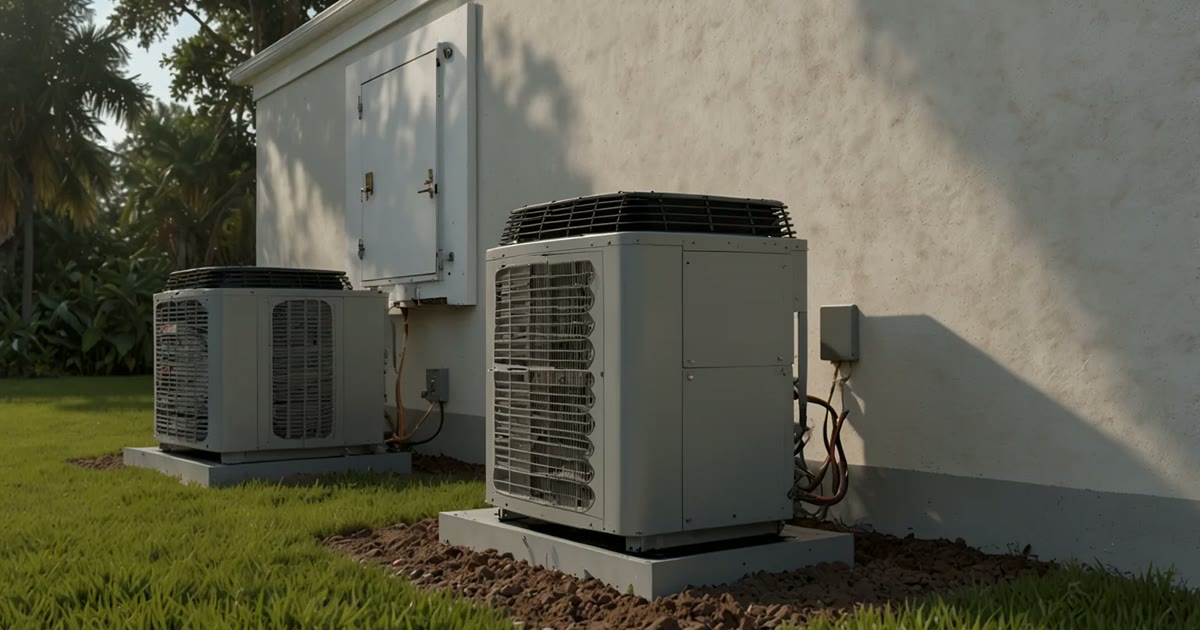
Indoor air quality in San Antonio, FL comes down to three things: controlling humidity, filtering what your AC already pulls through the system, and keeping the coil and ducts clean enough that the system isn't spreading what it collects. In Florida's climate, humidity is the biggest problem — a home that holds moisture above about 60% relative humidity grows mold and dust mites faster than any filter can catch up. Most improvements start with your existing air conditioner, not a new gadget. If your system is struggling to keep up and you want a straight answer about what's worth doing, call City to City HVAC at (239) 810-9080 and we'll walk through your setup with you.
Indoor air quality (IAQ) is the condition of the air inside your home — how much humidity, dust, pollen, mold spores, and other particles it carries — and how those things affect your health and comfort.
Key Takeaways
- In San Antonio, FL, humidity control matters more than any single filter or gadget — your AC is your main dehumidifier.
- 88% of US households use air conditioning, and in the South that figure is 93%, so your AC's condition is your indoor air quality strategy (per EIA).
- Filter upgrades, coil cleaning, and duct sealing each do a different job; the right order depends on what your system is already doing.
- Whole-home solutions beat room-by-room gadgets in most Florida homes because the AC moves all the air anyway.
- A system that short-cycles or runs constantly usually can't dehumidify well — that's a mechanical problem, not an air-quality product problem.
Why is indoor air quality harder to manage in Florida than up north?
Because the air outside holds far more moisture, and that moisture follows you inside every time a door opens. In a dry climate, an air conditioner mostly cools. In Pasco County and across Central Florida, it also has to wring water out of the air, and when it can't keep up, humidity settles into carpets, closets, and the attic above your ceiling.
Warm, damp air is exactly what mold spores wait for. Once mold starts on a coil, in a drain pan, or inside flex duct, the system itself becomes the delivery method — every cooling cycle moves spores through the house. That's why Florida IAQ advice starts with the HVAC system rather than with a standalone purifier.
There's also a usage reality worth naming. According to the US Energy Information Administration's 2020 Residential Energy Consumption Survey, 88% of US households use air conditioning, and in the South region that rises to 93%. Single-family homes hit 90%. If nearly every home here runs AC most of the year, the quality of the air depends heavily on how well those systems are maintained.
What does humidity actually do to a home's air?
High humidity makes the air feel warmer, so homeowners lower the thermostat. That cools the room but often leaves the moisture behind, because a system that cools fast in short bursts doesn't run long enough to pull much water out of the air. You end up with a cold, clammy house — the classic Florida complaint.
Dust mites thrive above roughly 50-60% relative humidity. Mold doesn't need standing water, just damp surfaces. And humid air holds more of the particles you're trying to remove, because moisture makes them heavier and stickier, so they cling to surfaces instead of getting caught by a filter.
The fix is usually mechanical, not chemical. A properly sized system with a clean coil and correct airflow removes moisture as a byproduct of running long, steady cycles. When we inspect systems around San Antonio and the surrounding communities, undersized ductwork and dirty coils are the two most common reasons a home feels muggy even with the thermostat set low.
Which indoor air quality upgrades are worth it — and which aren't?
Start with the basics your system already depends on. A clogged filter starves airflow, and low airflow means poor dehumidification and a coil that freezes or fouls. From there, the upgrades that matter most in Florida homes are filtration, moisture control, and source control — in roughly that order for most households.
| Upgrade | What it does | Best for | Watch out for |
|---|---|---|---|
| Higher-MERV filter (MERV 11-13) | Captures finer particles like pollen and mold spores in the air your system already moves | Allergy and mold-sensitive households with systems that can handle the added resistance | Some systems lose airflow with dense filters; check what your blower can handle |
| Whole-home dehumidifier | Removes moisture independently of cooling, keeping humidity steady on mild days | Homes that feel muggy in spring and fall when the AC runs less | Needs a drain path and maintenance like any other equipment |
| UV coil treatment | Targets mold growth on the indoor coil and drain pan where moisture collects | Homes with recurring coil or drain-pan biological growth | It treats the coil, not the air in each room — filtration still matters |
The takeaway: filtration cleans the air your system moves, dehumidification fixes the moisture that makes Florida air feel heavy, and UV addresses the damp surfaces where growth starts. Most homes need the first two before the third.
How does your air conditioner's size and condition affect the air you breathe?
An oversized AC is an indoor air quality problem disguised as a comfort upgrade. A system that's too big cools the house quickly and shuts off, so it never runs long enough to dehumidify. The result is the clammy, musty feeling that sends people shopping for purifiers when the real issue is cycling behavior.
Condition matters just as much. A coil coated in dust and biological growth transfers less heat and sheds less water. A duct system with leaks in the attic pulls that hot, humid attic air into the return side, which raises indoor humidity and loads the air with insulation fibers and whatever else lives up there.
Occupancy plays a role too. ENERGY STAR notes that room air conditioners need roughly 600 BTU added per extra person regularly in the space, and capacity can drop about 10% in a heavily shaded room — the same logic scales up for whole homes. More people means more moisture from cooking, showering, and breathing, and a shaded Florida home has different heat gain than a sun-baked one. Sizing and settings should reflect how your household actually lives. You can read the specifics on the ENERGY STAR room air conditioner guidance page.
If your system runs constantly, short-cycles, or leaves the house feeling damp, those are diagnosable problems. Our AC repair team looks at airflow, refrigerant charge, and duct condition before recommending any air-quality product, because fixing the mechanical issue often changes the air more than an add-on would.
What can you do yourself this week to improve the air in your home?
Change the filter. It's the single highest-impact task, and in Florida's long cooling season filters load up fast. If you can't remember the last time it was changed, it's overdue. Check the size printed on the frame and set a phone reminder for the next one.
Look at your thermostat fan setting. Setting the fan to ON instead of AUTO keeps air moving and filtering between cooling cycles, which evens out temperature room to room. The tradeoff is that it re-evaporates some coil moisture into the air, so on very humid days AUTO is usually the better call.
Walk the house for moisture sources. A dripping drain line, a damp AC closet, bath exhaust fans that vent into the attic instead of outside — each one feeds the humidity problem directly. Fix the drip, run the fans during and after showers, and keep closet doors cracked so air can move.
Keep outdoor clearance around the condenser. Rinse the coil gently with a hose a couple of times during the season, and clear vegetation back at least a couple of feet. A condenser struggling to reject heat makes the whole system work harder and dehumidify worse.
When does indoor air quality need a professional instead of a DIY fix?
When the symptoms point inside the system. Musty smell at startup, visible growth on registers, water where it shouldn't be, humidity that stays high no matter the thermostat setting — these usually mean coil, drain, or duct issues that need eyes and gauges, not a new filter.
Duct leakage deserves special mention here. In Florida homes with attic ductwork, leaks on the return side pull unconditioned attic air straight into the system. Sealing ducts is unglamorous work, and it rarely gets marketed the way purifiers do, but it addresses the source instead of the symptom.
Our HVAC maintenance service covers exactly this ground: coil condition, drain function, airflow measurements, and a look at the duct system. Twice a year is the rhythm that works in this climate — once before cooling season ramps up, once mid-year when the system has logged heavy hours.
That seasonal pattern matters for air quality more than it might seem. Emergency calls spike in the hottest months, which means a lot of homes are running systems that are limping along until they fail. A system limping along is also a system dehumidifying poorly — so the homes that wait for a breakdown are often the same homes with the worst indoor air during the very months it matters most. Scheduled maintenance customers, by contrast, tend to catch coil and drain problems before they show up as musty air or a warm house in August.
If you're in San Antonio, FL or anywhere from Fort Myers, Cape Coral, Naples, Bonita Springs, Estero, or Lehigh Acres, we can take a look at what your system is actually doing before you spend money on add-ons that may not address the real issue.
Do air purifiers and UV lights actually work in Florida homes?
Some do specific jobs well, and marketing tends to blur those jobs together. A UV lamp aimed at the indoor coil does one thing: it suppresses biological growth on the wettest surface in your system. That's genuinely useful in Florida, where coils stay wet for months at a time. It is not a whole-house air cleaner.
In-duct filtration and standalone HEPA units do a different job — removing particles from the air itself. For particle removal, the filter in your return grille is already doing most of the work your system allows, so upgrading filter media (if your blower can handle it) usually delivers more than adding a gadget downstream of it.
Be skeptical of any product sold on a single number without context. What matters in a Florida home is the combination: adequate filtration, controlled humidity, clean surfaces inside the system, and ductwork that doesn't import attic air. Products fill gaps in that combination; they don't replace it.
If you're weighing a specific product against a duct repair or a coil cleaning, ask what problem it solves and where that problem is coming from. Our indoor air quality services page breaks down the options we install and the conditions each one fits.
How often should Florida homes service their AC for better air quality?
Twice a year is the honest answer for this climate. Cooling season here runs longer than almost anywhere else in the country, and the system's dehumidification work — the part that most affects your air — depends on a clean coil, a clear drain, and correct airflow. All three degrade gradually, and none of them announce it.
The drain line deserves a monthly glance from you and a professional flush at service visits. A clogged condensate drain doesn't just risk water damage; a backed-up pan is a standing-water source right at the heart of your air handler.
Between visits, your part is simple: filter changes, keeping the outdoor unit clean and clear, and paying attention to how the house feels. If rooms start feeling damp or the musty smell returns at startup, that's your early warning — call it in before it becomes a summer emergency.
Planning upgrades or replacement? Our air conditioner installation guide covers sizing and efficiency choices that shape indoor comfort for the next decade, not just the next season.
City to City HVAC — Florida License #CAC1824318 — serving Lee & Collier Counties, including Fort Myers, Cape Coral, Naples, Bonita Springs, Estero, and Lehigh Acres.
Frequently Asked Questions
How can I lower the humidity in my Florida home?
Make sure your AC runs long, steady cycles rather than short bursts, keep the filter fresh so airflow stays strong, and use bath and kitchen exhaust fans when cooking or showering. If humidity stays high even with the system running well, a whole-home dehumidifier or a duct sealing job may be the missing piece. A technician can measure what's happening before you buy anything.
What MERV rating should I use for my AC filter?
MERV 11 is a solid middle ground for most homes; MERV 13 captures finer particles but adds airflow resistance that some blowers can't handle. Check your system's specifications or ask a technician before jumping to a denser filter. A filter your system struggles to pull air through does more harm than a lower rating would.
Why does my house smell musty when the AC starts?
That smell usually means biological growth on the indoor coil or in the drain pan, where moisture sits between cycles. It can also come from dirty ductwork or a clogged condensate line. A coil cleaning and drain service typically resolves it, and a UV coil treatment can keep it from returning in our damp climate.
Do I need a whole-home dehumidifier if I have air conditioning?
Not always, but many Florida homes benefit from one during spring and fall, when mild temperatures mean the AC runs less and removes less moisture. If your home feels muggy on 75-degree days, that's the signature of this gap. A technician can test your indoor humidity across conditions and tell you whether the AC alone can carry the load.
How often should I change my AC filter in Florida?
Every one to three months for standard one-inch filters, more often during heavy cooling season or with pets in the home. Longer-life media filters follow their rated schedule, usually six to twelve months. Check it monthly during summer — a loaded filter chokes airflow, which hurts both cooling and dehumidification.