Heating and Cooling in the City of Fort Myers: What Homeowners Need to Know
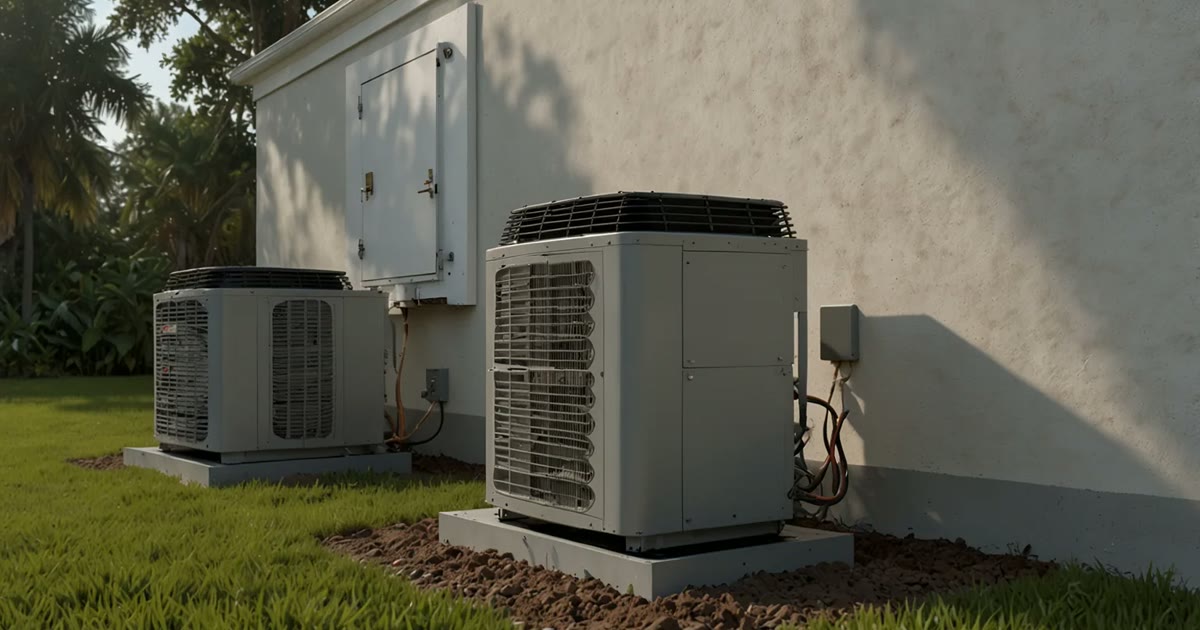
Heating and cooling service covers the installation, repair, and maintenance of the HVAC systems that keep your home comfortable year-round, and in Fort Myers that mostly means air conditioning, since our winters are short and our summers are brutal.
If you own a home in the City of Fort Myers, your air conditioner is not a luxury. It is the machine that keeps your family safe through a nine-month cooling season, and it works harder here than almost anywhere in the country. The U.S. Energy Information Administration reports that 88% of American households use air conditioning, and in the South that number climbs to 93% (https://www.eia.gov/todayinenergy/detail.php?id=52558). When your system struggles, you need a licensed local contractor who can diagnose it fast and fix it right. City to City HVAC is a Florida-licensed contractor (License #CAC1824318) serving Fort Myers and the surrounding communities. If your system is down right now, call us at (239) 810-9080 and we will talk you through what is happening and what it will take to get you cool again.
Key Takeaways
- Fort Myers homes run air conditioning most of the year, so annual maintenance matters more here than in northern markets.
- 93% of Southern households use AC, the highest share of any U.S. region, according to the EIA's 2020 Residential Energy Consumption Survey.
- Correct sizing matters: ENERGY STAR guidance calls for adding 600 BTU per extra occupant and reducing capacity about 10% for heavily shaded rooms.
- Emergency repair calls spike in summer; our own dispatch records show emergency repairs dominate the fleet's summer service mix.
- City to City HVAC is licensed as FL License #CAC1824318 and serves Fort Myers, Cape Coral, Naples, Bonita Springs, Estero, and Lehigh Acres.
Why does Fort Myers put more strain on an HVAC system than most cities?
Fort Myers is one of the hardest places in America to be an air conditioner. Our cooling season runs roughly nine months, humidity stays high even in winter, and salt air from the Gulf corrodes outdoor coils and electrical connections faster than inland systems experience. A unit that would last 15 years in Ohio may need significant component work at 10 here.
The numbers back this up. The EIA's 2020 Residential Energy Consumption Survey found that 93% of households in the South use air conditioning, compared with 88% nationally (https://www.eia.gov/todayinenergy/detail.php?id=52558). In practice, that means your system rarely gets an off-season. Compressors, capacitors, and contactors accumulate wear month after month.
Humidity is the hidden factor. Removing moisture from the air is half the job an AC does in Southwest Florida. When a system is oversized, it cools the room quickly but shuts off before dehumidifying, leaving your house cold-clammy instead of cool-dry. That is one reason we take load calculations seriously rather than guessing at tonnage.
How do I know if my AC needs repair or replacement?
Short answer: if the fix costs less than about a quarter of what a new system would, and the unit is under 10 years old, repair usually wins. Beyond that, replacement starts making sense, especially when the system uses R-22 refrigerant or has had multiple compressor or coil failures.
Watch for these signals. Warm air from vents with the thermostat set low. Short cycling, where the unit kicks on and off in quick bursts. Water pooling around the air handler, which usually means a clogged condensate drain but can mean a frozen coil. And the big one: a sudden spike in your FPL bill with no change in how you use the house.
Some problems are cheap. A failed capacitor might cost a couple hundred dollars installed. A burned-out compressor on an older system is a different conversation, because you are putting serious money into equipment that may fail again next season. We give you both numbers and let you decide. No pressure, no scare tactics.
What size air conditioner does my Fort Myers home actually need?
Right-sizing is where a lot of installs go wrong. Bigger is not better. An oversized system cools fast, cycles short, leaves humidity behind, and wears itself out. An undersized one runs constantly and never catches up on an August afternoon.
ENERGY STAR's sizing guidance gives a sense of the variables involved: add about 600 BTU for each additional occupant beyond the standard assumptions, and reduce capacity roughly 10% for a room with heavy shade (https://www.energystar.gov/products/room_air_conditioners). Those adjustments matter in Fort Myers, where lanais, big windows, and afternoon sun exposure vary house to house even on the same street.
A proper Manual J load calculation accounts for square footage, insulation, window orientation, shading, ceiling height, and how many people live in the home. We run the numbers before we quote. If a contractor sizes your system by square footage alone, ask questions.
How often should HVAC maintenance be done in Southwest Florida?
Twice a year works for most homes here: once in early spring before the heavy cooling season, and once in fall. In northern climates, annual service is often enough. Here, the runtime alone justifies two visits.
What happens during a maintenance visit? Coil cleaning, refrigerant check, electrical testing, condensate drain clearing, and a look at blower components. The condensate line deserves special mention. In our climate it clogs with algae fast, and a blocked drain means water where water should not be, sometimes on a ceiling. It is one of the most common emergency calls we run.
Between visits, change your filter every one to three months. Check it monthly during peak summer. A loaded filter chokes airflow, which drives up runtime, stresses the blower, and can freeze the coil. It is the cheapest insurance in the whole system.
What does emergency AC service look like during a Fort Myers summer?
Summer is when systems fail, and it is not a coincidence. The equipment is running at maximum load during the hottest, longest days of the year, and any weak component tends to give out under that stress. Our own dispatch records tell the story clearly.
That chart comes from our own service records across Lee and Collier counties. Emergency repair calls climb steadily from late spring, peak through the summer months, and taper as the weather moderates. Routine maintenance and installations hold steadier lines year-round. For you as a homeowner, the practical takeaway is simple: the wait for service is longest exactly when failure is most likely, so a system that has been limping along in May is a system to deal with before June.
If you are anywhere in the Fort Myers area and your system quits during a heat wave, call (239) 810-9080. We prioritize no-cooling situations, especially in homes with elderly residents, young children, or anyone with health conditions that heat makes worse.
How much does heating and cooling service cost in Fort Myers?
We will not invent numbers here, and you should be suspicious of any contractor who quotes you a firm price sight unseen. What we can tell you honestly is what drives cost: the nature of the repair (a part versus labor-intensive work), the age and accessibility of your equipment, and whether it is a planned install or an emergency call.
What we do promise is a written estimate before work begins, an explanation of what failed and why, and options when options exist. If a repair is a short-term patch on a dying system, we say so. If a replacement can wait a season, we say that too.
One local note: Florida building codes and permitting requirements apply to equipment replacement in the City of Fort Myers, and permits protect you. A permitted, inspected install means the work was done to code and documented, which matters when you sell the house.
Which system type makes the most sense for a Fort Myers home?
Most homes here run a central split system: an air handler inside, a condenser outside, ductwork between. But it is not the only option, and the right answer depends on your house.
| System type | Best fit | Strengths | Watch-outs |
|---|---|---|---|
| Central split system | Single-family homes with existing ductwork | Whole-home comfort, pairs with air handler, familiar technology | Duct leaks waste cooling; condenser exposed to salt air |
| Ductless mini-split | Room additions, garages, homes without ducts | Zone control, no duct losses, efficient for targeted spaces | Multiple indoor units needed for whole-home coverage |
| Heat pump | Homes wanting one system for heating and cooling | Handles our mild winters efficiently; no separate furnace needed | Sizing and humidity control must be done right |
The takeaway: for most single-family Fort Myers homes with ducts in place, a central split system or heat pump is the straightforward choice, while ductless units shine for additions and hard-to-condition rooms.
Speaking of single-family homes, the EIA data shows they are the most likely housing type to rely on AC, at 90% nationally (https://www.eia.gov/todayinenergy/detail.php?id=52558), and Southwest Florida's housing stock is heavily single-family, which is why whole-home system health is such a common concern around here. Whether you are in a mid-century bungalow near the river or a newer build south of town, the principles are the same: right-size the equipment, keep it maintained, and fix small problems before they become emergency calls. We cover more on keeping systems healthy in our guide to HVAC maintenance for Southwest Florida homes.
City to City HVAC serves homeowners across Fort Myers, Cape Coral, Naples, Bonita Springs, Estero, and Lehigh Acres, and if you are comparing contractors for a bigger project, our breakdown of what to expect from an AC installation walks through the process step by step. If you are dealing with a system that will not cool right now, our page on emergency AC repair explains what to check before you call and what to expect when you do.
What should you do before calling for service?
A few checks save everyone time. Confirm the thermostat is set to cool and the batteries are good. Check the filter. Look at the outdoor unit and clear away leaves, grass clippings, or debris. Check the breaker panel for a tripped circuit. If the outdoor unit runs but the air handler does not, or vice versa, note that, because it points the diagnosis in a specific direction.
Then call. Describe what the system is doing, when it started, and anything unusual that happened before, like a storm or a power flicker. Southwest Florida gets its share of both, and lightning and surges kill capacitors and control boards regularly. Surge protection is worth discussing on any new install.
Why does local licensing matter?
Florida licenses HVAC contractors at the state level, and the license number tells you the contractor has met state requirements for experience, testing, and insurance. City to City HVAC operates under Florida License #CAC1824318. When you hire a licensed contractor, you have recourse if something goes wrong. When you hire an unlicensed handyman, you often do not, and neither does your homeowner's policy if the work causes damage.
Ask for the license number. Verify it. Any legitimate contractor will give it to you without hesitation. We put ours on the truck, the paperwork, and this page.
What makes Fort Myers different from other HVAC markets?
Three things, mostly. First, the runtime: systems here work close to year-round, so wear accumulates faster and maintenance intervals matter more. Second, the climate itself: humidity control is as important as temperature, and salt air shortens equipment life, especially near the coast. Third, the storm factor: hurricane season brings power surges, flooding risk to outdoor equipment, and post-storm service demand that can stretch local capacity thin.
On that last point, elevation matters. Outdoor units should be mounted with storm exposure in mind, and if your condenser sits low in a flood-prone area, that is worth a conversation before the next wet season. After a storm, give the system a moment and inspect the outdoor unit for debris before restarting it.
Whether you need a second opinion on a replacement quote, a maintenance visit before summer, or a system that is blowing warm air as you read this, we are a local crew that answers the phone. Call (239) 810-9080 or use the quote form below, and we will take it from there.
Frequently Asked Questions
How often should I service my AC in Fort Myers?
Twice a year is the practical answer in Southwest Florida, once before peak cooling season and once after. Our systems run far more hours per year than the national average, and the EIA reports 93% of Southern households rely on AC. Between professional visits, check your filter monthly and replace it every one to three months during heavy use.
How long should an air conditioner last in Florida?
Expect a shorter lifespan than the national norm because of year-round runtime, high humidity, and salt-air corrosion near the coast. Well-maintained systems here often serve reliably for around a decade before major component decisions arise, while neglected systems fail sooner. Regular coil cleaning, filter changes, and electrical checks are the biggest factors in stretching that timeline.
Why is my electric bill so high in the summer?
Your AC is the largest electricity user in most Fort Myers homes, and it runs longest during summer. A dirty filter, low refrigerant, a failing capacitor, or leaky ductwork all force longer runtimes. If your bill jumps sharply without a change in habits, that is a common early sign of a developing mechanical problem worth checking.
Should I repair or replace my AC system?
Repair makes sense when the system is young, the fault is minor, and the repair cost is small relative to replacement. Replacement makes sense when the system is older, uses phased-out refrigerant, or needs a major component like a compressor or coil. We give you the numbers for both paths in writing so you can decide with facts, not pressure.
Do you serve areas outside the City of Fort Myers?
Yes. City to City HVAC serves Fort Myers plus Cape Coral, Naples, Bonita Springs, Estero, and Lehigh Acres across Lee and Collier counties. We are a Florida-licensed contractor, License #CAC1824318, and we handle repair, maintenance, and installation throughout that service area. Call (239) 810-9080 to confirm availability for your address.
Disclosures: City to City HVAC is a Florida-licensed air conditioning contractor, License #CAC1824318. This article is for general information and does not constitute a binding quote; all pricing requires an on-site or remote evaluation. Service availability may vary by location and season. Any statistics cited are drawn from the sources linked in this article and reflect their most recently published figures; actual system performance and costs vary by home.
Ready to get your system sorted? Call City to City HVAC at (239) 810-9080 or fill out the quote form above, and a licensed local tech will take a look.