HVAC Repair in Fort Myers Beach, FL: What Homeowners Need to Know
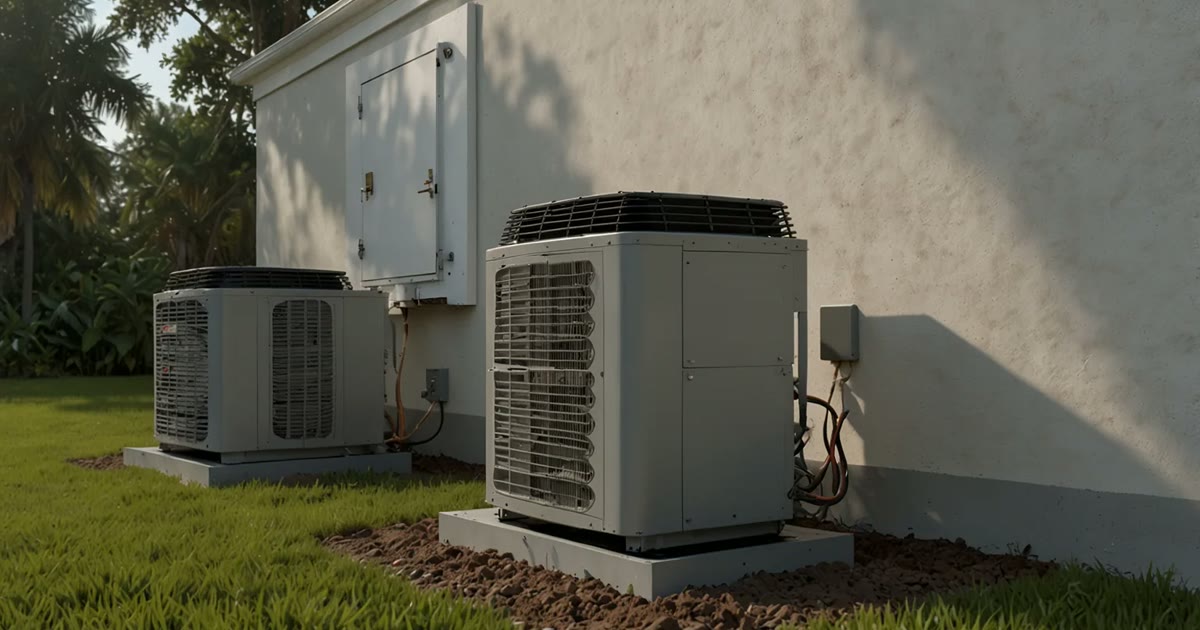
HVAC repair is the diagnosis and fixing of heating, ventilation, and air conditioning equipment — the refrigerant circuit, compressor, blower, thermostat, and electrical parts that keep a home cool.
When your AC quits in Fort Myers Beach, the fastest fix is a licensed local tech who can reach you fast and diagnose on the spot. City to City HVAC (FL License #CAC1824318) serves Lee and Collier Counties with same-day repair calls for cooling failures, refrigerant leaks, frozen coils, and dead compressors. Call (239) 810-9080 and describe what the unit is doing — strange noises, warm air, tripped breaker — and we'll tell you what a service visit involves before we roll a truck. Salt air, hurricane season, and near-year-round runtime make beachside systems work harder than most, so early diagnosis usually means a smaller repair.
Key Takeaways
- Fort Myers Beach homes run AC most of the year; salt air and storm season accelerate corrosion and electrical failures.
- Warm air, weak airflow, water around the air handler, and a tripped breaker are the four calls we get most.
- Repair vs. replace usually comes down to system age, refrigerant type, and the cost of the failed part.
- Emergency repair calls dominate our summer service mix across the SWFL fleet — scheduling maintenance in spring helps you avoid the June–September crunch.
- Every tech we send holds Florida license #CAC1824318 and serves Lee and Collier Counties.
Why do Fort Myers Beach AC systems break down more often than inland ones?
Salt air is the short answer. Coastal homes put condenser coils, cabinet screws, and electrical connections in a corrosive environment that inland systems never see, and corrosion is behind a large share of the capacitor, contactor, and coil failures we diagnose on the beach side of Estero Island.
The second reason is runtime. Per the U.S. Energy Information Administration's 2020 Residential Energy Consumption Survey, 88% of U.S. households use air conditioning, and that figure rises to 93% in the South — which means systems here get far less off-season rest than the national picture suggests. A compressor that runs ten months a year wears faster than one that runs four.
Then there's storm season. Power flickers, surge events, and debris around outdoor units all show up in our call log between June and November. If a storm is coming, shut the system off at the thermostat and the outdoor disconnect before you evacuate or lose power — restarting a compressor into a brownout is one of the most preventable failures we see.
What are the signs my AC needs repair right now?
Call for service when the system blows warm air, when airflow drops noticeably at the vents, when you see water pooling at the indoor air handler, or when the outdoor unit hums but the fan doesn't spin. Each of those points to a specific failure: warm air often means low refrigerant or a failed capacitor; weak airflow usually means a clogged filter, a failing blower motor, or a frozen evaporator coil; water at the air handler is almost always a clogged condensate drain line, which in a Florida attic can turn into ceiling damage fast.
One more: a breaker that trips repeatedly. Reset it once. If it trips again, leave it off and call. Repeatedly resetting a tripping circuit on a struggling compressor can turn a small electrical fault into a dead compressor.
Homeowners sometimes ask whether they should keep running the system in a degraded state. If the air is cold but the unit is loud, you have some time. If it's blowing warm or the coil is icing, shut it off — running a low-refrigerant system hard is how a repairable unit becomes a replacement.
Should I repair or replace my AC system?
The honest answer depends on three things: the age of the equipment, the refrigerant it uses, and what actually failed. A fifteen-year-old R-22 system with a failed compressor is a different decision than a six-year-old R-410A system with a bad capacitor.
Here's how the common scenarios compare:
| Scenario | Typical fix | Repair or replace? |
|---|---|---|
| Failed capacitor or contactor | Replace the electrical part, same visit in most cases | Repair — inexpensive part, quick fix at any system age |
| Clogged condensate drain | Clear the line, flush the drain pan | Repair — routine maintenance-level fix |
| Refrigerant leak in an older R-22 system | Locate leak, repair coil or line set, recharge | Often replace — R-22 supply is limited, so repeated recharges on old equipment rarely make sense |
| Failed compressor on a system 12+ years old | Compressor replacement | Usually replace — weigh compressor cost against remaining system life |
Takeaway: electrical and drain repairs are almost always worth doing; refrigerant and compressor decisions on older systems deserve a straight cost conversation with your tech before you commit.
How fast can a tech get to Fort Myers Beach?
During the summer peak, emergency calls dominate our service mix across the SWFL fleet — the chart below reflects our own service records, showing the monthly share of calls by type, with emergency repair climbing sharply from June through September while scheduled repairs and maintenance flatten out.
What that pattern means for you is simple: a call placed in July competes with every other sweltering household on the barrier islands, while a call placed in April gets scheduled on your terms. If you're flexible on timing, book maintenance and non-urgent repairs in the spring. If you're hot right now, say so when you call (239) 810-9080 — dispatch prioritizes no-cooling emergencies, especially for households with young children, elderly residents, or health conditions.
We serve Fort Myers Beach and the surrounding region — Fort Myers, Cape Coral, Naples, Bonita Springs, Estero, and Lehigh Acres — from trucks staged across Lee and Collier Counties, which shortens drive times compared to outfits dispatching from a single distant shop.
What does a typical repair visit look like?
The tech arrives, asks what symptoms you've seen, and starts with the basics: thermostat settings, filter condition, breaker state, and a look at both the indoor and outdoor units. Then comes electrical testing — capacitors, contactors, amp draws — followed by refrigerant pressures if the electrical side checks out. Most diagnoses are complete within the first hour.
You get the finding in plain language before any work happens: what failed, what the repair involves, and what the alternatives are. For a capacitor, that's a five-minute conversation. For a coil leak on an older system, it's a longer one, and we'd rather have it with you standing there than hand you a surprise invoice later.
Common same-visit repairs include capacitor and contactor replacement, drain line clearing, blower motor swaps on stocked parts, and thermostat replacement. Parts that require ordering — compressors, evaporator coils, specialty motors — get scheduled as a follow-up with the system stabilized in the meantime where possible.
How does salt air change maintenance for beachside homes?
If you live on or near Estero Island, rinse the outdoor condenser cabinet with fresh water periodically and keep landscaping trimmed back so airflow isn't choked. Corrosion-resistant coatings exist for coastal condensers; if you're replacing equipment, ask about them. Electrical connections near the coast benefit from annual inspection, because corrosion raises resistance and heat at terminals long before anything visibly fails.
Sizing matters too, and it's a place where homeowners can check a contractor's math. ENERGY STAR's guidance on room air conditioners calls for adding about 600 BTU per additional occupant beyond the standard assumption, and reducing capacity by roughly 10% for a heavily shaded room — the same logic of matching capacity to actual conditions applies to whole-home systems. An oversized unit cools fast, shuts off, and leaves humidity hanging in the house; an undersized one never catches up in August. Either way you feel it.
Filter changes are the cheapest preventive step there is. In a household running AC nearly year-round with beach traffic and humidity, check the filter monthly during heavy use. A loaded filter forces the blower to work harder and is a leading contributor to frozen coils.
Whether you're on the beach side or inland, we cover Fort Myers, Cape Coral, Naples, Bonita Springs, Estero, and Lehigh Acres with the same licensed service — see our full air conditioning repair service for what a diagnostic visit includes.
What should I do before the hurricane season rush?
Spring is the window. Have the system serviced before June: clean coils, verify refrigerant charge, test capacitors under load, clear the condensate line, and check the disconnect and surge protection. A system that enters storm season in good condition is less likely to join the emergency-call pile after the first big outage.
Know where your outdoor disconnect is and how to shut the system off. Surge protection on the condenser circuit is worth discussing with your tech — post-storm surge damage is a recurring repair category in our coastal calls. And after any outage, wait a few minutes with the thermostat off before restarting, so the compressor doesn't kick in against equalizing pressures.
Our HVAC maintenance program covers the pre-season checklist, and if you're weighing a full system decision, our guide to AC replacement in Southwest Florida walks through sizing, efficiency ratings, and coastal equipment options.
Who's the right contractor for the job?
Florida licenses HVAC contractors through the Department of Business and Professional Regulation, and license #CAC1824318 is verifiable — check it. A licensed contractor carries the training and insurance the state requires, and pulling permits for equipment replacement is part of the job, not an upsell.
City to City HVAC serves Lee and Collier Counties, holds Florida license #CAC1824318, and has built its schedule around the realities of Southwest Florida cooling: salt air, storm season, and systems that barely get a break. When you call, you talk to people who can tell you what's likely wrong before the truck rolls.
Frequently Asked Questions
How often should I have my AC serviced in Fort Myers Beach?
Once a year at minimum, ideally in spring before the heavy cooling season. Coastal homes benefit from more frequent attention because salt corrosion attacks coils and electrical connections faster than inland. Between visits, check your filter monthly during peak use and keep the outdoor unit clear of vegetation and debris.
Why is my AC blowing warm air?
The most common causes are a failed capacitor, low refrigerant from a leak, a frozen evaporator coil, or a compressor that isn't starting. Check the filter and breaker first — both are quick homeowner checks. If those are fine, shut the system off and call for service, because running a low-refrigerant system can damage the compressor.
How long do AC systems last in Florida?
Coastal Florida systems generally wear faster than the national norm because of near-year-round runtime and salt exposure. Age alone isn't the whole decision, though — refrigerant type, repair history, and efficiency all matter. A tech can assess your specific system and give you a straight repair-versus-replace picture based on what's actually failing.
Can I perform any AC repairs myself?
Homeowner-safe tasks include changing filters, clearing a visible condensate drain clog at the access point, resetting a breaker once, and rinsing the outdoor cabinet. Refrigerant work, electrical repairs, and anything inside the sealed system require a licensed contractor by Florida law — both for safety and because improper handling of refrigerant carries regulatory penalties.
What should I check before calling for repair?
Confirm the thermostat is set to cool with batteries that work, check that the filter isn't loaded, verify the breaker and the outdoor disconnect are on, and look for ice on the refrigerant lines or water at the air handler. Reporting those observations when you call shortens the diagnosis and helps dispatch gauge urgency.
Ready to get the system looked at? Call (239) 810-9080 or send the quote form above and a licensed tech will schedule your Fort Myers Beach repair visit.